Weekly FDA Roundup: salt substitutes cleared for cheddar, bread, and 137 other standardized foods, and Dreyer's warned over recurring Listeria, October 10–16, 2026
A final rule lets 139 standardized foods swap salt for substitutes like potassium chloride. Plus Dreyer's Listeria warning letter and two contract firms that bent microbiology data.
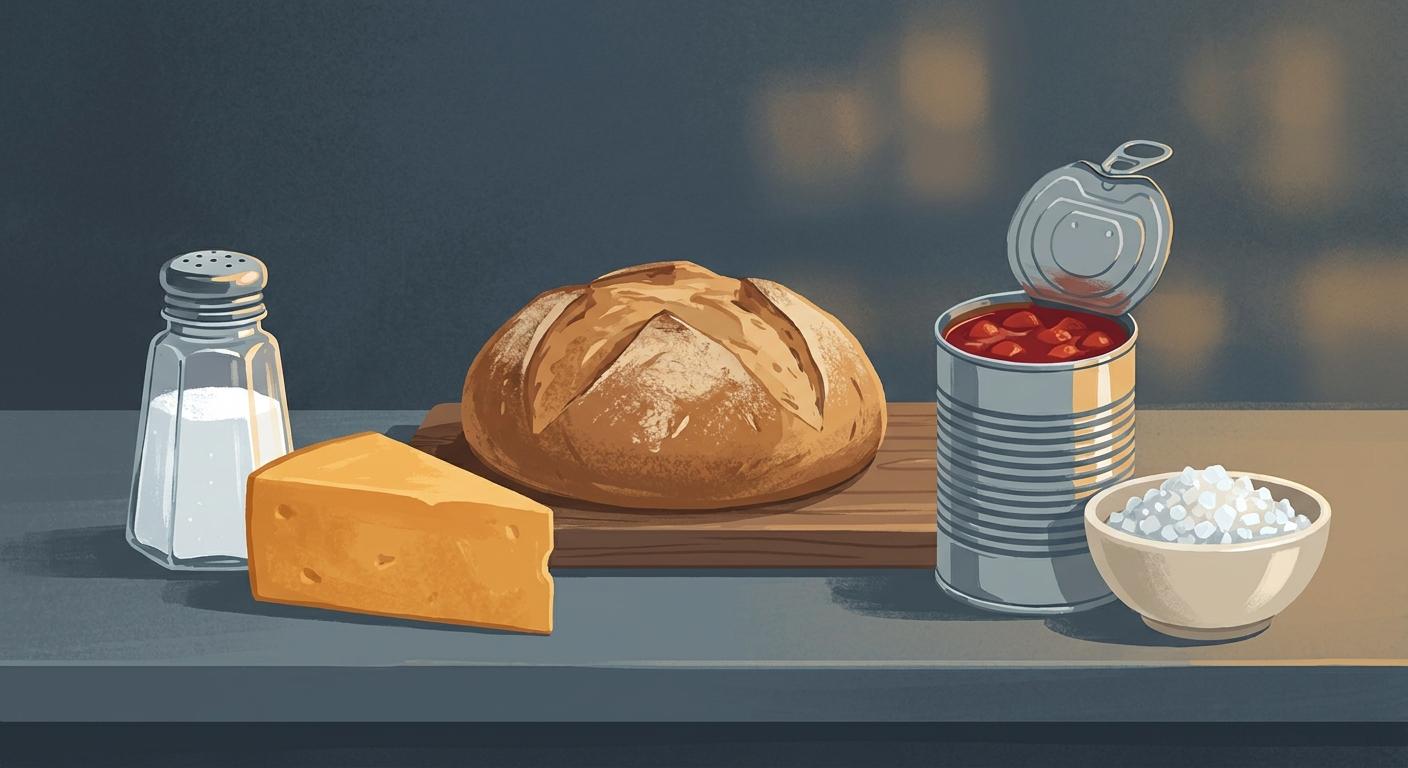
Until now, a cheddar made with potassium chloride in place of some of its salt only met the cheddar standard if it cut enough sodium to carry a claim like "reduced sodium." That changes December 14. On October 13 FDA published a final rule that lets manufacturers use salt substitutes in 139 standardized foods, including mozzarella, macaroni, canned tuna, and mayonnaise. The same day, FDA posted 16 warning letters, including one to Dreyer's Grand Ice Cream over Listeria findings that kept turning up in its Bakersfield plant for five years.
By the numbers
- 39 FDA actions posted October 10 to 16: 16 warning letters, 10 Federal Register notices, 5 recall notices, 4 device safety alerts, 2 rules, and 2 press releases.
- 16 warning letters, all posted October 13: 5 for drug manufacturing or testing, 4 for the Foreign Supplier Verification Program (FSVP), 3 for human food plants, and 4 others.
- 3 Class I device recalls, plus an Early Alert tied to one death.
- 0 enforcement report entries. FDA's weekly recall report had not reached our feed by Friday, so this week's food recall picture is thin.
- Standout: 8 confirmed Listeria monocytogenes positives at Dreyer's Bakersfield plant in the first five weeks of 2026.
Lead story: salt substitutes are now allowed in standardized foods
A standard of identity is FDA's recipe-level definition of a food. If your product is labeled "cheddar cheese" or "white bread," it has to follow 21 CFR part 133 or 136. Most of those standards list salt as an ingredient and did not allow anything else in its place. You could reformulate with potassium chloride, but then you had to rename the product or meet the sodium cuts required for a nutrient content claim.
The final rule, proposed in April 2023, fixes that with one new definition at 21 CFR 130.30. A salt substitute is any safe and suitable ingredient that replaces some or all of the added salt, reduces sodium, and does the job salt does in the food. FDA amended 80 standards directly, and 59 more pick up the change through cross-references, for 139 in total. The list covers dozens of cheeses, breads and rolls, pasta, canned vegetables, catsup, canned tuna, margarine, chocolate, syrups, mayonnaise, and salad dressing.
The fine print matters for anyone planning a reformulation:
- There is no minimum. Replacing any amount of salt qualifies.
- The substitute must not change the "basic nature and essential characteristics" of the food.
- The rule authorizes no new ingredients. A substitute still has to be GRAS or an approved food additive.
- There are no new labeling requirements, but the substitute must appear in the ingredient list by its common or usual name. "Salt substitute" is not an acceptable collective name.
The rule takes effect December 14, 2026. The dairy amendments (parts 131 and 133) are open to objections until November 12, and FDA says proper objections can stay those provisions. The rule creates no obligation. If you make a standardized food and have shelved a lower-sodium version because of its name, this is your opening.
Key developments
Dreyer's: five years of Listeria swabs, no preventive control
FDA inspected Dreyer's Bakersfield plant from January 27 to February 20. Its environmental monitoring records from 2021 through February 5, 2026 showed recurring L. monocytogenes and Listeria species findings. In the first five weeks of 2026 alone there were 19 Listeria positives and 8 confirmed L. monocytogenes positives. Yet the hazard analysis for its Round Top Drumsticks concluded pathogens were "not reasonably likely to occur" because sanitation controlled them. The company also did not document root cause investigations for repeat positives, despite its own procedure requiring them. The investigator watched a line worker in heavy-duty reusable gloves break down cardboard boxes, handle trash liners, and then touch cookies for ice cream sandwiches. FDA called the responses a "significant effort," and still issued the letter. A sanitation program does not replace a sanitation preventive control when the swabs keep coming back positive.
Two labs that made bad micro results disappear
Silgan Dispensing Systems got failing yeast and mold counts on incoming components at its Spokane plant, then averaged them with passing samples to produce a pass. A customer later ran a Class I recall for possible fungal contamination, and Silgan committed to suspend all drug production at the plant. At Eurofins SF Analytical Laboratories in Horsham, Pennsylvania, some analysts recorded only in-spec plate counts and left out results that were too numerous to count, a practice the lab traced back to February 2025. An investigator found a colony on a plate logged as 0 CFU. If either firm makes or tests your product, ask whether your certificates of analysis are affected.
Device recalls: contaminated prep kits and a mitral valve balloon
Medline and AVID Medical told customers to destroy entire convenience kits containing BD ChloraPrep applicators that may carry Aspergillus penicillioides. Earlier notices had said to just remove the applicator. Edwards Lifesciences recalled four lots of its Commander M delivery system for SAPIEN M3 mitral valves after three balloon bursts, with one death and one serious injury. CooperSurgical's INCA infant nasal CPAP sets can come loose at the cannula, which can lower CPAP pressure.
Four FSVP letters, one familiar owner
Distribuidora Jazmin of McAllen, Texas, was inspected July 15 to 23. So was Importaciones La Bufa of Mission, Texas, warned last week. Both letters are addressed to the same owner, Ivan Alfonso Serrano. Moda Food of Woodland Park, New Jersey, had been inspected three times before March 2026. Its written FSVPs for phyllo, baklava, and tahini halva relied on supplier certifications, but it could not produce a single certificate or audit report.
The bigger picture
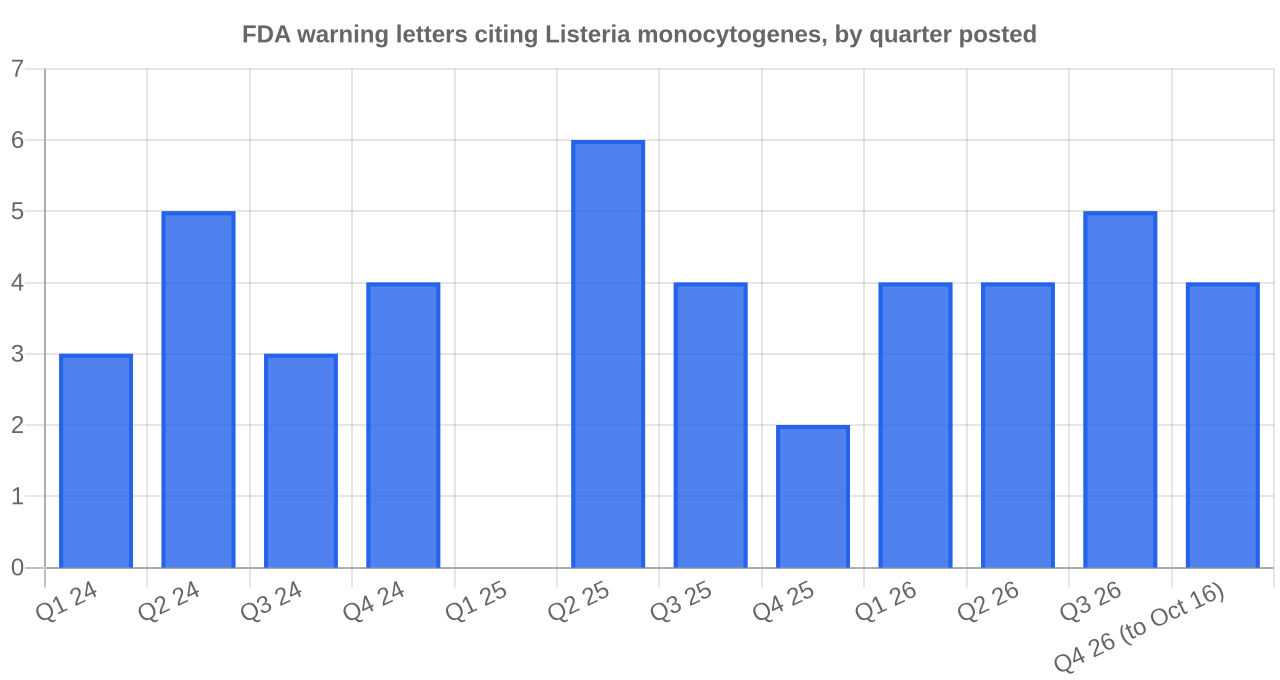
Two weeks into the fourth quarter, FDA has posted four warning letters that cite Listeria monocytogenes: La Pradera's Venezuelan-style cheeses on October 6, then Dreyer's, RDM Express's fermented cabbage, and Lewis Sausage's pet food on October 13. That already matches the full first and second quarters of 2026. Since 2024 the count has run between zero and six letters a quarter. The zero was the first quarter of 2025.
The pattern inside the letters matters more than the count. In three of the four, the hazard analysis either did not treat environmental pathogens as a hazard needing a preventive control or did not exist at all. La Pradera had no food safety plan. If your plant makes ready-to-eat food and your environmental swabs have ever come back positive, check that your hazard analysis says so.
What to watch
- Dairy objections close November 12, and the salt substitute rule takes effect December 14.
- Rare disease framework. FDA's public meeting is October 28, with comments due December 11.
- Raw milk cheddar. Family Farmstead Dairy recalled one lot of raw mild cheddar after Maryland sampling found two Shiga toxin-producing E. coli strains, then corrected the serotypes to O26:H11 and O45:H2.
- New World screwworm. A notice covers four more emergency use authorizations, for products from Elanco, Zoetis, Bimeda, and Sergeant's.
- Argatroban. Par Health recalled 22 lots for particulate matter including cellulose, plastics, and possibly stainless steel.
Policy Canary tracks every FDA action, warning letters, recalls, guidance, and rules, against the specific products you make, by name and by ingredient. See what we would flag for your products.
Get this in your inbox every Friday.
Free FDA intelligence digest. No account required.