Weekly FDA Roundup: BD's intraosseous needle recall follows four deaths, and FSVP warning letters hit a 2026 high, July 25–31, 2026
BD recalls intraosseous needle sets after 45 serious injuries and 4 deaths, two more moringa Salmonella recalls, FY2027 user fees, and five FSVP warning letters in one day.
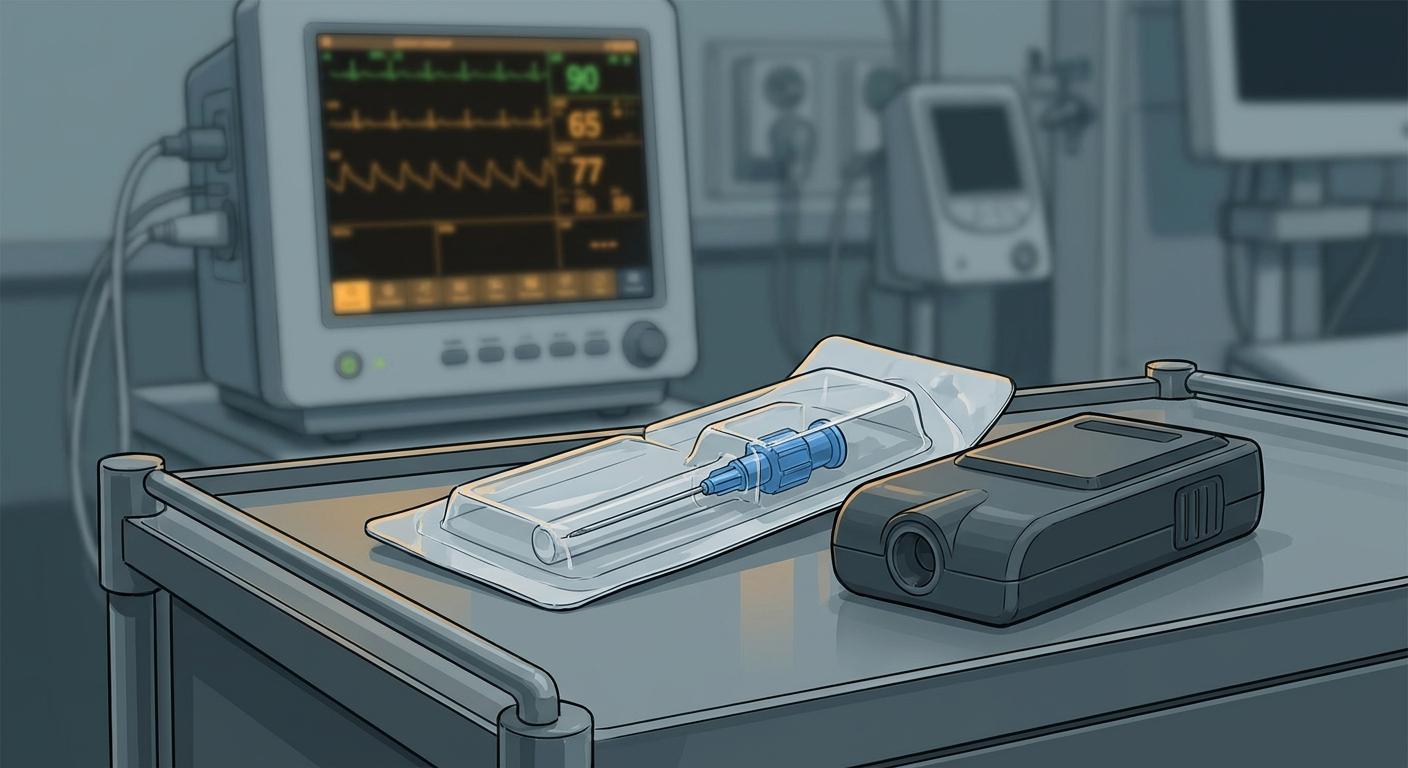
The week's most serious recall involved a device paramedics reach for when they cannot find a vein. On July 30 Becton, Dickinson and Company (BD) began pulling specific lots of its intraosseous needle sets after 45 serious injury reports and four deaths, all four during resuscitation for out-of-hospital cardiac arrest. On the enforcement side, importers took most of the heat: five of the week's seven warning letters cited the Foreign Supplier Verification Program.
By the numbers
- 54 FDA actions posted July 25–31, including 11 fiscal year 2027 user fee notices on July 30.
- 7 warning letters, all posted July 28. Five cited the Foreign Supplier Verification Program (FSVP).
- 6 Class I actions: four enforcement-report recalls (two moringa recalls over Salmonella, a kimbap with undeclared fish, a supplement containing tianeptine) and two device corrections FDA rated its most serious type.
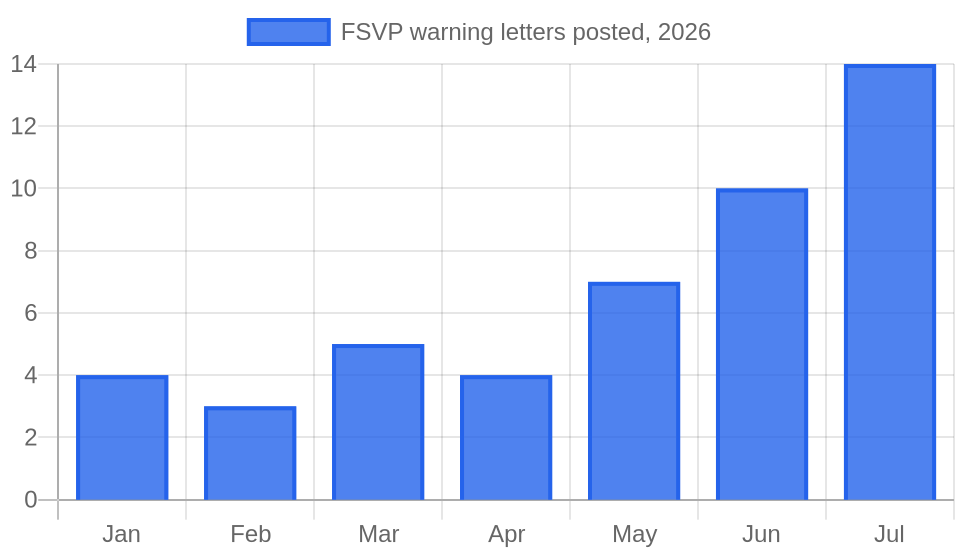
- 14 FSVP warning letters posted in July, the most of any month this year.
- Standout: BD's intraosseous needle recall, tied to 75 complaints, 45 serious injury reports, and 4 deaths.
Lead story: BD pulls intraosseous needle sets after four cardiac-arrest deaths
Intraosseous (IO) access means driving a needle into bone to deliver fluids and drugs when a peripheral IV will not go in. It is a rescue technique for cardiac arrest and severe trauma. BD's recall covers specific lots of its 15-gauge Needle Kits for Powered Driver in five lengths, 15mm through 55mm (catalog numbers D015151NK through D015551NK).
The defect is dimensional. BD says the affected lots were made with out-of-tolerance dimensions, so the obturator (the stylet inside the needle) can lock and refuse to come out after placement. Based on complaints and BD's bench testing, it happens when the drill is not pulled straight back during insertion or the obturator is rotated during removal. The clinician then has to start over with a new needle or a different access route. In a cardiac arrest, that delay is the injury.
Through June 2026 BD counted 75 complaints and 45 serious injury reports, plus four deaths in which the stylet could not be removed during resuscitation. The affected lots shipped between September 30, 2024, and June 12, 2026. BD is telling customers and distributors to stop using the lots and destroy them. The BD Intraosseous Powered Driver is not part of the recall, and BD says it has found the root cause and changed the product and its labeling.
FDA had not posted its own classification by week's end. Given four deaths, we expect a high-risk designation.
EMS agencies, emergency departments, and distributors should match inventory against the lot list in Appendix 1 of BD's customer letter now. For device makers, the timeline is the lesson: a tolerance escape that only fails under one user motion shipped for about 20 months before complaint trending caught it.
Key developments
Two more moringa recalls, and one went into other products
FDA's July 29 enforcement report added two Class I Salmonella recalls for moringa. Total Nutrition Inc recalled 8,492 units of TNVitamins 100% Organic Moringa Capsules and Moringa Powder, sold nationwide. Green Jeeva LLC recalled 2,490 kg of bulk Organic Moringa Powder after the ingredient tested positive, and that powder had already gone to four consignees who used it for further processing and distribution. A bulk ingredient recall rarely ends with the bulk supplier. Total Nutrition has now appeared in six moringa recall notices and enforcement entries in our records since May 26. If moringa is on your label, ask your supplier for lot-level Salmonella results. The same report carried a third supplement Class I: Modern Warrior Ready capsules, which FDA found contained tianeptine, 1,4-DMAA, and aniracetam.
FY2027 user fees: device registration jumps 20.7%
FDA's fiscal year 2027 fees take effect October 1, 2026, and devices moved the most. The annual establishment registration fee rises to $13,785 from $11,423, with no small-business discount. A 510(k) costs $28,653 ($7,163 for small businesses), up 9.9%. Drug sponsors got a small break: a PDUFA application with clinical data falls 1.7% to $4,600,753. Food facilities have a line item too. FSMA reinspection and recall oversight now bills at $354 an hour with domestic travel and $414 with foreign travel, up from $339 and $376. Those fees only apply when FDA comes back after a violation, which makes them a price on failing an inspection.
Five importers, no FSVP at all
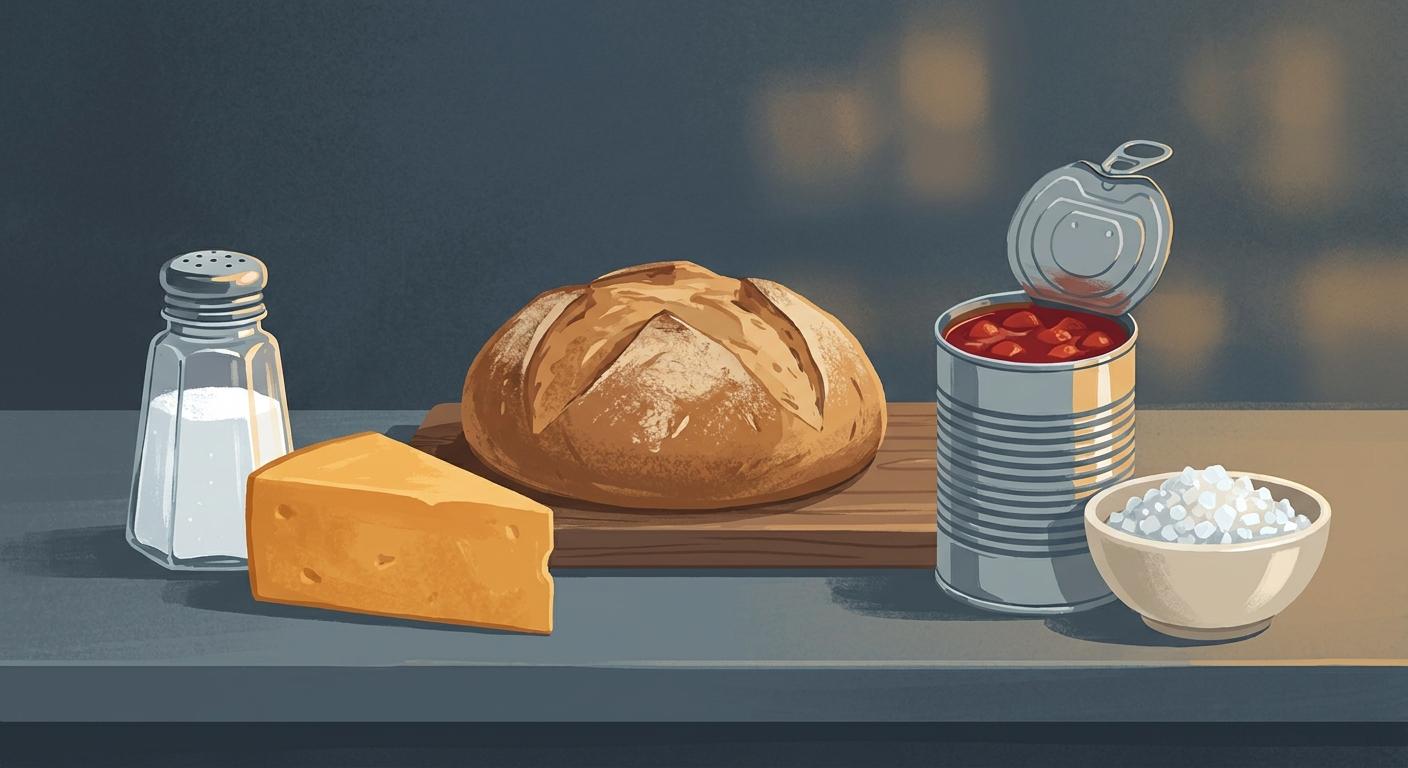
Five of the seven warning letters went to importers that, according to FDA, had no FSVP for the foods they bring in: corn chips and granola at Piquin Y Sabores Distributors (Texas), limes, plantains, and jicama at San Jorge Produce (Texas), canned chickpeas at Delight Distribution (New Jersey), powdered milk at Prida Import & Export (Florida), and string cheese and amaranth candy at Eherbs Imports (California). Delight also never verified its chickpeas were made under the low-acid canned food rules in 21 CFR Part 113. The other two letters went to VasoCorp, whose NeuropAWAY supplements were sold as "clinically proven" to reduce burning, tingling, and numbness by about 76%, and to AHC Products, an animal drug maker that put microbiological and heavy metal results on certificates of analysis without running those tests.
Publix widens last week's frozen blueberry recall
The organic blueberry E. coli O145:H28 recall we flagged last week grew. On July 29 Publix recalled all lots of GreenWise Organic Whole Blueberries and Whole Mixed Berries sold in eight states, citing traceback and epidemiological data. Chilean supplier Frutas y Hortalizas del Sur had recalled a single lot on July 3, and CDC has an open outbreak investigation. Publix pulled the berries from sale in late June, so the remaining exposure sits in home freezers.
The bigger picture
FSVP enforcement has climbed every month since April. Counting distinct warning letters FDA posted in 2026 that cite the Foreign Supplier Verification Program, the tally ran 4, 3, 5, and 4 from January through April, then 7 in May, 10 in June, and 14 in July. July's 14 were 27% of the 52 warning letters FDA posted that month. The letters read almost identically: no FSVP, a Form 483a either unanswered or answered without documents, and a reminder that the foods can be detained under Import Alert 99-41. Several recipients had been inspected before, Piquin Y Sabores in 2024 and Prida in 2021 and 2022. If you import any food, even one SKU, a written FSVP is the cheapest compliance document you will ever produce.
What to watch
- FDA's classification of the BD recall. Watch for an Early Alert or Class I designation and any expansion of the affected lots.
- BHT comments close August 31, 2026. FDA reopened its request for information on BHT in human food and food contact uses for 30 days.
- Resmed Astral ventilators. FDA rated the correction for Astral 100 and 150 units built before October 2024 its most serious type, with five serious injuries reported. Replacement circuit boards are scarce, so fixes will come in phases.
- Huons anesthetic kits, again. Argon Medical issued a Class I correction for kits, including bone marrow and pacing trays, that contain recalled Huons lidocaine. Two serious injuries were reported as of June 1.
Policy Canary tracks every FDA action, warning letters, recalls, guidance, and rules, against the specific products you make, by name and by ingredient. See what we would flag for your products.
Get this in your inbox every Friday.
Free FDA intelligence digest. No account required.