FDA Inspections in 2026: DOGE Didn't Cut Inspectors — It Cut Everything Around Them
FDA is running 36% below pre-pandemic inspection levels. DOGE's 2025 cuts to support staff, lab scientists, and travel logistics made closing that gap harder.
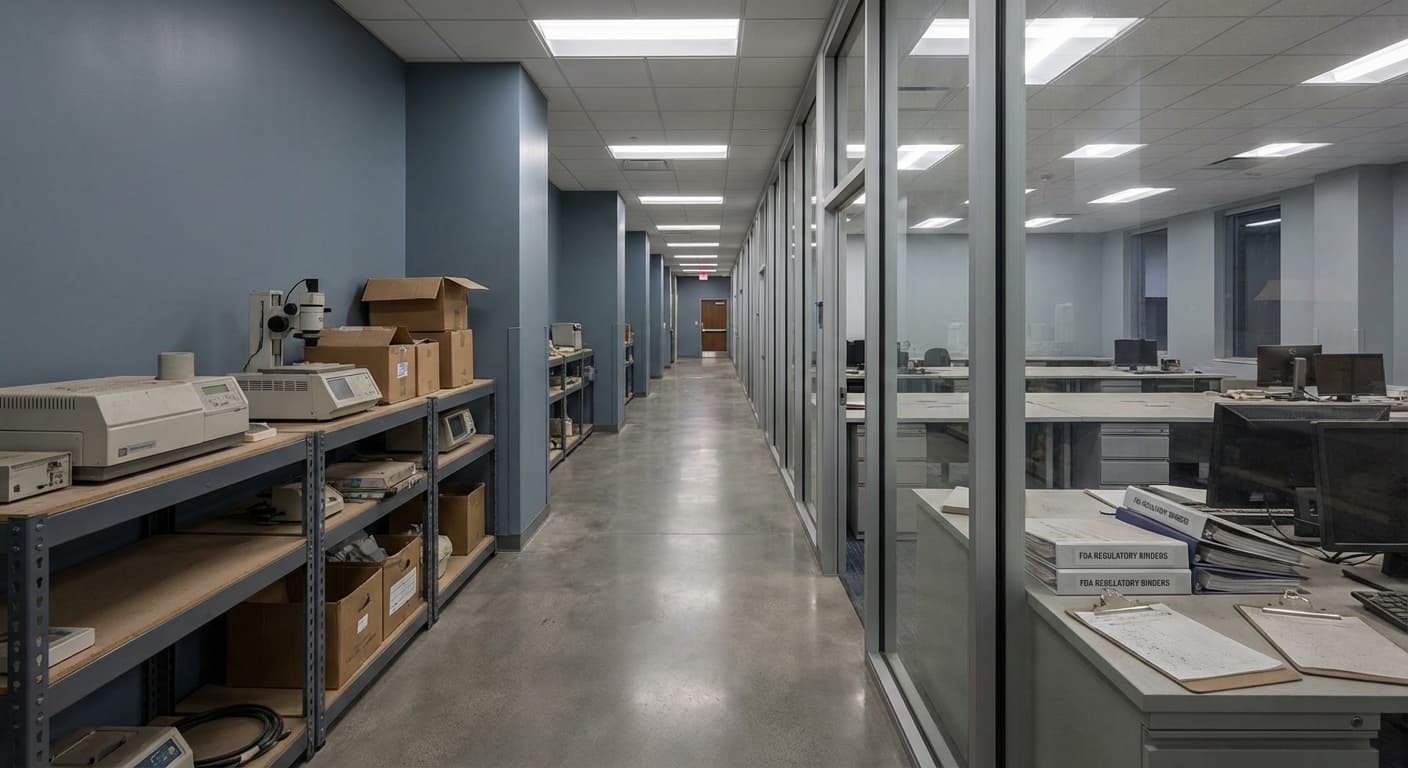
FDA inspections in 2026 are running at 36% below pre-pandemic levels. DOGE didn't cause that gap, but it made closing it much harder.
In February and March 2025, the Department of Government Efficiency directed layoffs across HHS that eventually hit the FDA with two separate waves: roughly 1,000 probationary employees fired in February, then an announcement of 3,500 additional cuts in March as part of a broader 20,000-person HHS reduction. FDA Commissioner Marty Makary told podcaster Megyn Kelly that "there were no cuts to scientific reviewers or inspectors." That's technically defensible. What happened to everything surrounding the inspectors is another story.
What DOGE Actually Cut at FDA
The most consequential single action for inspection capacity was the April 2025 elimination of 170 staffers in FDA's Office of Inspections and Investigations (OII). These weren't inspectors. They were the people who made inspections logistically possible — the staff who handled travel bookings, visas, and security for inspectors heading to pharmaceutical plants in India, China, and across Latin America.
Termination letters said the positions were "unnecessary or virtually identical" to other agency roles. Within days, FDA leadership was expediting plans to hire private contractors to do the same work.
The San Francisco regional food testing laboratory lost at least 10 scientists. Those labs test samples collected by inspectors — without the lab analysis, inspectors can't build the documentation needed to issue warning letters or pursue enforcement actions. Fifteen more scientists from FDA's Division of Food Processing Science and Technology in Chicago were eliminated. That team's work included detecting hazardous chemicals in packaged food and reducing microplastics.
FDA's entire media affairs office was cut. Communications that once moved through a dedicated team now route through HHS's press office, which has "only a handful of staffers, most of whom don't have any background in FDA issues," according to one FDA official who spoke with the Associated Press on condition of anonymity. Recall notices — the mechanism by which companies and consumers learn about contaminated products — get slower when press coordination slows down.
The Numbers Behind the Gap
Source: FDA Report to Congress, FY2024 (drug inspections only, domestic and foreign combined)
The FDA conducted 978 drug inspections in FY2019. COVID collapsed that to 156 in FY2021. By FY2023, the agency had climbed back to 621 — a recovery, but still 36% short of pre-pandemic volume. The GAO flagged this gap and urged FDA to develop retention strategies, noting that inspector attrition had been outpacing hiring for years.
Then came the 2025 cuts.
The DOGE layoffs didn't primarily target front-line inspectors — they targeted the infrastructure inspectors depend on. By June 2025, the FDA was approximately 20% understaffed across the board, per Sarah Sorscher at the Center for Science in the Public Interest. Many fired workers were reinstated following court orders, but a significant share chose retirement or took jobs elsewhere rather than return to a destabilized agency. That brain drain doesn't reverse when court orders come down.
Scientists at FDA's tobacco and device review centers told Reuters they were assigned roughly double their normal workload after February's layoffs. Some 180-day statutory review deadlines for tobacco product applications — legally mandated timelines — were no longer going to be met. Meetings with regulated companies were being canceled or replaced with written-only responses.
What This Means for Regulated Companies in 2026
Less inspection capacity cuts two ways, and neither direction is clean.
Lower inspection frequency creates risk, not relief. If FDA can inspect your facility every three to five years instead of every two to three, that sounds like less pressure. But the agency doesn't stop monitoring. Warning letters still flow — the FDA issued 30 in a single week targeting telehealth companies promoting compounded GLP-1 drugs in March 2026. Novo Nordisk received a warning letter in March 2026 after a January–February 2025 inspection of its Plainsboro, New Jersey headquarters found serious adverse event reporting failures for its GLP-1 products. Enforcement doesn't disappear; it concentrates.
When inspectors do show up, they may be newer, working with less internal support, and under pressure to document findings quickly and thoroughly. An inspector who once had lab scientists available within days to test collected samples now has longer turnaround times. That creates its own pressure: inspectors document what they can observe on-site. If you have latent documentation gaps, personnel training failures, or process deviations that haven't been corrected, a DOGE-era inspection with fewer resources behind it may be less able to give you informal guidance — and more likely to issue a 483 observation on what it does find.
Fewer inspections mean less feedback, not less scrutiny. Pre-inspection consultations and guidance meetings are being cut. If you're navigating a new product registration, a facility modification, or a complex CGMP question, the informal channels — "ask an FDA contact before you submit" — are thinner. FDA's media affairs capacity reduction also means public communications about evolving enforcement policy are slower and harder to track.
International supply chains face specific risk. The elimination of OII's travel support staff means foreign inspections of overseas drug manufacturers are harder to schedule and execute. FDA is still conducting them, but the support infrastructure that made complex multi-week international trips logistically viable is being rebuilt from scratch via contractors. If you source APIs or finished goods from Indian or Chinese manufacturers, the probability of those facilities receiving timely inspection has dropped.
The Enforcement Signal Still Runs
None of this means the FDA has gone dark. Warning letters issued in early 2026 suggest the enforcement apparatus is still functional: 30 letters targeting compounded GLP-1 promoters, a Novo Nordisk letter over adverse event reporting failures, and ongoing import alerts and recall activity.
What's changed is the ratio between inspection depth and enforcement breadth. The agency can still catch large, visible violations — but the kind of quiet, routine inspection that catches a facility trending in the wrong direction before it becomes a serious problem is the function most affected by DOGE's support staff cuts.
Howard Sklamberg, former FDA top inspection official, put it plainly: "If you put all this together, even if you didn't have a reduction in the number of people who do the inspections, you're reducing their support. The natural result is going to be fewer inspections."
Three Things to Do Now
1. Audit your CGMP documentation before the inspector arrives. With longer intervals between inspections, some companies get comfortable. Don't be one of them. Review your last 483 observations and make sure corrective actions are fully documented and verifiable. When an inspector does come, they're working faster with less backup.
2. Increase your own monitoring. FDA's reduced communications capacity means fewer proactive signals reaching regulated companies. Warning letters, import alerts, and guidance updates still publish — but with less PR support behind them, they reach fewer people. If you're not systematically monitoring FDA enforcement activity relevant to your products, you're operating with a delayed information feed.
3. Don't assume deferred inspections mean deferred accountability. DOGE cut the support infrastructure, not the agency's legal authority. Import alerts, warning letters, and recall authority remain intact. A facility that hasn't seen an inspector in four years is not a facility that's been cleared.
Policy Canary monitors FDA warning letters, recalls, guidance documents, and Federal Register changes — matched to the specific products and ingredients your company makes. You'll know when enforcement activity moves toward your category before it reaches your door.
Get this in your inbox every Friday.
Free FDA intelligence digest. No account required.