Moringa Salmonella Outbreak 2026: Three Separate Investigations, 169 Illnesses, and a Broken Botanical Supply Chain
FDA and CDC have investigated three separate Salmonella outbreaks tied to moringa leaf powder since October 2025. 169 illnesses, 43 hospitalizations, 11 recalls in our database. Here is what every supplement brand with a botanical SKU should do now.

Moringa Salmonella Outbreak 2026: Three Separate Investigations, 169 Illnesses, and a Broken Botanical Supply Chain
In six months, moringa has become the single most reliably contaminated botanical in the US dietary supplement market.
Since October 2025, FDA and CDC have opened and closed three separate multistate Salmonella outbreak investigations, every one of them traced back to moringa leaf powder. Three different Salmonella strains, three different finished-product brand portfolios, three different sets of importers and packers — and the same ingredient sitting at the bottom of all of them.
The numbers:
- 169 confirmed illnesses across the three investigations, with 32 states affected in the largest outbreak alone
- 43 hospitalizations
- 11 moringa recalls in the Policy Canary regulatory database since October 1, 2025, 9 of them Class I
- 1 extensively drug-resistant strain that shrugs off the antibiotics doctors typically reach for first
If you sell a product that contains moringa — capsules, powder, blended greens, herbal tea, energy chew, functional beverage — you should be treating this as a CGMP and FSVP problem rather than a news story. Your next inspection, your next insurance renewal, and your next Amazon compliance review are going to want receipts.
Here is what happened, why it keeps happening, and what to do before your brand becomes the next line item in a CDC press release.
The three outbreaks
These are separate investigations with separate case definitions, and FDA and CDC have not officially linked them. No finished-product brand appears in more than one. But the pattern sits in plain sight for anyone reading the traceback records, and three additional moringa Salmonella recalls in the same window — Bulk & Organic LLC, Africa Imports, and Healthy Truth — were not publicly tied to any of the three named investigations.
October 2025: Salmonella Richmond — traced to a single Indian supplier
FDA investigators walked the supply chain from eight retail points of sale up through a single US importer to one farm-direct supplier in India. The lot was the same across the chain, and the strain — Salmonella Richmond, a rare serovar — made whole-genome sequencing straightforward.
Food To Live brand organic moringa leaf powder and supergreens powder mix were recalled in 8 oz through 44 lb pack sizes. The product had moved nationwide through Amazon, Walmart, Target, Etsy, eBay, and Food To Live's own site, plus bulk shipments to food manufacturers and ingredient buyers who probably did not know the name Food To Live appeared anywhere in their supply chain.
Final count once CDC closed the file: 65 patients in 28 states, 14 hospitalizations.
January 2026: Salmonella Typhimurium and Newport — two strains, 97 people, 32 states
Two strains in one outbreak investigation, tied to Live it Up brand Super Greens powder and Why Not Natural Organic Moringa Green Superfood powder. 59 of 67 interviewed patients reported eating a product containing moringa leaf powder; the rest told slightly different stories, but the ingredient name kept repeating.
CDC closed this investigation on March 17, 2026 with 97 confirmed cases, 26 hospitalizations, and no deaths — the largest supplement-linked Salmonella outbreak since the 2023 strawberry episode.
February 2026: Extensively drug-resistant Salmonella
Rosabella brand moringa capsules, distributed by Ambrosia Brands out of Cheyenne, Wyoming. Seven confirmed patients across seven states, three hospitalizations. The headcount is small, but the clinical picture is the part that matters: this strain is resistant to the antibiotics doctors normally reach for first when treating invasive salmonellosis. Ciprofloxacin, ceftriaxone, trimethoprim-sulfamethoxazole — the standard playbook does not work.
Rosabella sold direct-to-consumer through TikTok Shop and third-party resellers, which is exactly where FDA traceback capabilities are weakest. That is part of why the recall lagged the first cluster of illnesses by several weeks.
Why this keeps happening
Moringa is not a special ingredient. It is a leafy plant, typically grown in South Asia and sub-Saharan Africa, dried and ground into powder for capsules and blends. It is cheap, it has a clean marketing story ("superfood," "plant-based iron"), and it is overwhelmingly imported.
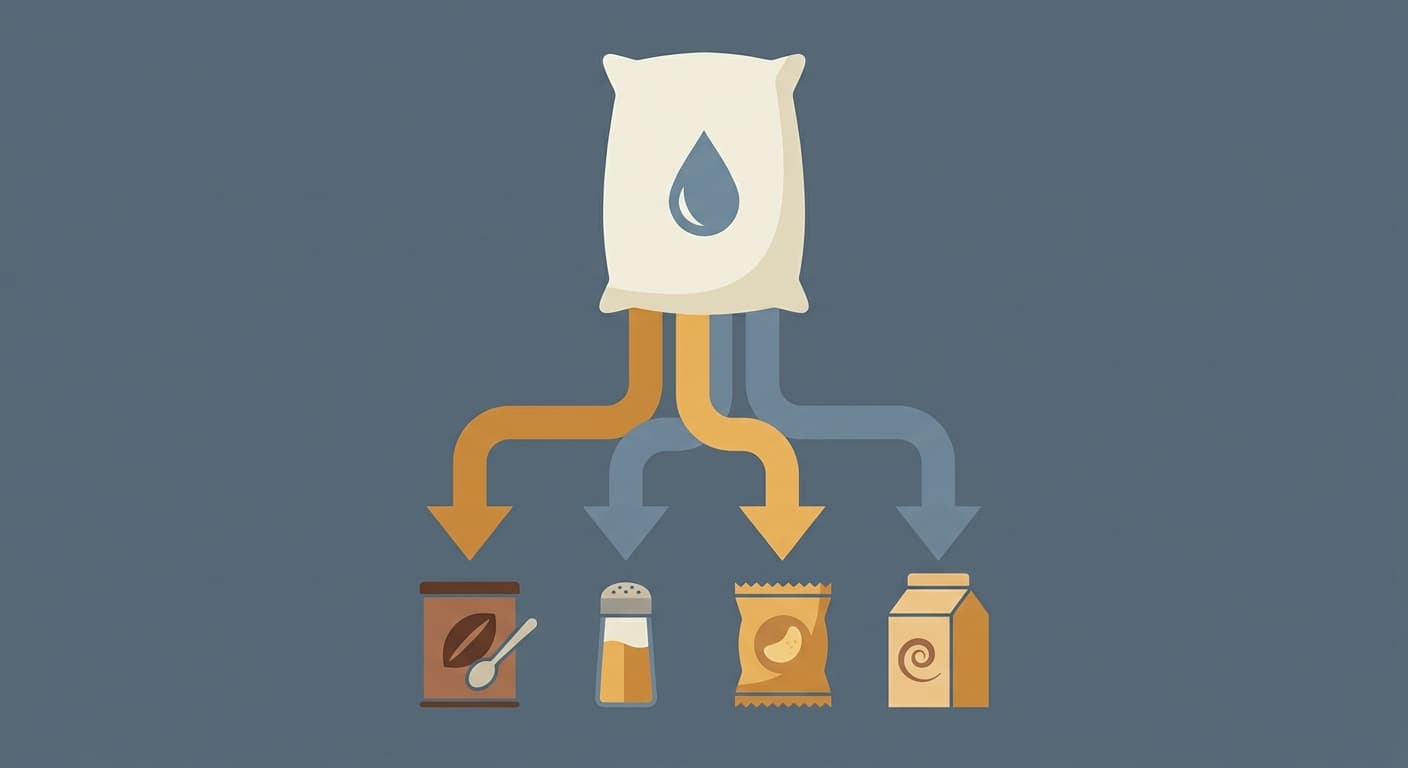
Leafy powders are also exactly the form factor Salmonella loves: high surface area, low water activity that extends Salmonella's dormant survival, minimal kill step before packaging. A single contamination event upstream — a bird in a drying yard, a cow in an irrigation channel, a grinder that was never swabbed — rides the powder through every finished-good factory that buys that lot.
The October 2025 outbreak made this concrete. Eight different retail SKUs all rolled back to one lot at one supplier in India, and that supplier almost certainly sold to more buyers than the ones FDA named. Whether the January outbreak shares upstream DNA is something we don't know yet, and that uncertainty is itself part of the problem.
Under FSMA, importers of moringa leaf powder for use in dietary supplements must operate a Foreign Supplier Verification Program. FSVP asks importers to verify that the supplier is producing food "at the same level of public health protection" as a US facility — for dietary supplement ingredients, that means dietary supplement CGMP under 21 CFR 111. In practice, a defensible FSVP file includes documented hazard analysis, supplier approval records, periodic onsite audit or records review, and a corrective action procedure when things go wrong.
Eleven recalls in six months is what FSVP looks like when it is happening on paper but not in practice. Importers were almost certainly running audits of some kind, and certificates of analysis were almost certainly being issued. The bacteria were arriving anyway.
What regulators are likely doing next
Three trends are worth tracking.
Expect FSVP-cited warning letters for at least two of the importers named in these investigations. FDA's enforcement pattern after outbreak closures is consistent: the agency walks back up the chain and writes up importers whose FSVP files cannot explain how contamination got through. We saw this after the 2022 bagged salad cyclospora outbreaks, and the same pattern is likely here.
Expect Import Alert additions for specific Indian moringa suppliers. Adding a foreign supplier to Import Alert 99-19 (DWPE for foods due to Salmonella) — or a new DWPE listing targeting adulterated botanicals specifically — would let FDA refuse entry of future shipments without physical inspection. That is the enforcement tool with real teeth.
Expect inspectional focus on domestic encapsulators and blenders that did not catch the contamination. 21 CFR 111.75 requires each batch of a component to be tested or otherwise verified before use, and "the supplier sent a COA" is not a complete answer if the COA is the only evidence. Expect 483 observations on written specifications for microbial limits, identity testing methods, and component disposition.
This is the standard FDA playbook after a botanical outbreak cluster. None of it should come as a surprise to anyone watching the enforcement data.
What to do if you sell a product containing moringa
There is no single right answer for every company, but there is a minimum bar. If you cannot answer yes to all of the following, you have work to do this month.
1. You know the exact supplier and country of origin for every lot of moringa in your finished goods for the last 12 months. Not just "India" — the FEI number, the facility address, the lot numbers. If your records stop at "our broker said it's organic," the answer is no.
2. You have recent microbial test results for each lot, not just a COA. Under 21 CFR 111.75(a)(1)(ii), you can rely on a supplier COA only if you have established the reliability of the supplier's test results through initial identity verification and periodic reverification. Most supplement brands have not done the periodic part. Salmonella screening on dried botanicals should be explicit in your specification and performed per lot by a qualified lab — yours or the supplier's, with supplier results confirmed on a scheduled basis.
3. You have written specifications for microbial limits that match FDA guidance. USP <2022> compendial microbial limits for botanical dietary supplements is the reference most brands cite. If your spec sheet does not include a Salmonella absent-in-25g requirement, that is a 483 waiting to happen.
4. You have a documented hazard analysis that identifies Salmonella as a known or reasonably foreseeable hazard for moringa leaf powder, and a preventive control that addresses it. After three outbreaks in six months, "not reasonably foreseeable" is no longer a defensible position.
5. You have a recall plan that works when half the distribution is Amazon FBA, TikTok Shop, and white-label resellers. The Rosabella case showed how slowly recalls move when a product lives on platforms that FDA does not have a direct line to. If you cannot pull every SKU from every channel inside 48 hours, map the channel-by-channel process now while it is theoretical.
The harder conversation
There is a second-order question worth naming: should moringa be on your ingredient list at all?
This is not a rhetorical flourish. The honest read of the last six months is that moringa carries a structurally higher microbial risk profile than most botanical ingredients, driven by a supply chain that is hard to audit at scale. Brands that stay in the category need to invest materially more in supplier oversight than they probably budgeted for when they added the SKU.
Some brands will make that investment and come out the other side with a more defensible product, and some will quietly reformulate around the ingredient. Both are reasonable choices. The one position that is hard to defend is staying in the category on the old model — CoA-based release, annual supplier review, no lot-level Salmonella testing — and hoping the outbreak wave skips you.
What we are watching at Policy Canary
We built Policy Canary to track FDA actions at the ingredient and product level rather than the press-release level. Most brands find out about a recall in their category from a customer email or a retail compliance notice, by which point the news cycle has moved on and the lawsuit clock has been ticking for days.
For the moringa cluster specifically, we are tracking:
- New recalls that reference moringa leaf powder or super-greens blends containing moringa, across all FDA centers
- Warning letters issued to the importers named in the three outbreak investigations
- Import Alert additions or modifications affecting Indian botanical suppliers
- FDA 483 observations that cite 21 CFR 111.75 or FSVP hazard analysis, filterable to our subscribers' exact product and ingredient profiles
If a supplement brand subscribes five products — say, a supergreens blend, a prenatal, an energy capsule, a sleep gummy, and a protein powder — we alert them the same day FDA publishes an action that touches any ingredient in any of those SKUs. Not "here is everything FDA did this week." Just the items that apply to the products you actually sell.
The moringa cluster is a case study in why that distinction matters. A brand with one moringa SKU in a catalog of forty would not have flagged the October 2025 Salmonella Richmond outbreak from a general FDA news feed; they would have assumed botanical recalls were someone else's problem. Six months and 169 illnesses later, "someone else" turned out to be the whole category.
- FDA: Outbreak Investigation of Salmonella: Moringa Leaf Powder (October 2025)
- FDA: Outbreak Investigation of Salmonella: Moringa Leaf Powder (January 2026)
- CDC: Extensively Drug-Resistant Salmonella Outbreak Linked to Moringa Powder Capsules
- CDC: Investigation Update: Salmonella Outbreak, January 2026
- Food Safety Magazine: Salmonella Outbreak Linked to Moringa Supplements Ends with 97 Sickened in 32 States
- FDA: FSMA Final Rule on Foreign Supplier Verification Programs (FSVP)
- eCFR: 21 CFR Part 1 Subpart L — FSVP for Food Importers
Get this in your inbox every Friday.
Free FDA intelligence digest. No account required.