One Salmonella-Positive Ingredient, 22 Downstream Class I Recalls: What the California Dairies Cascade Teaches About Supplier Risk
California Dairies recalled 2.7 million pounds of Salmonella-suspect milk powder in May 2026. Over the next three weeks, four companies that never made milk powder — Griffith Foods, Ghirardelli, PS Seasoning, Legacy Bakehouse — pulled 22 Class I products. Chick-fil-A and Costco were downstream. Here is how an ingredient cascade works, and how to see one coming.
One Salmonella-Positive Ingredient, 22 Downstream Class I Recalls: What the California Dairies Cascade Teaches About Supplier Risk
On May 13, 2026, California Dairies Inc. recalled roughly 2.7 million pounds of dried milk powder for potential Salmonella contamination. Over the next three weeks, four companies that had never been inspected, never been cited, and in most cases had never heard from FDA about this issue pulled 22 separate Class I products off the market.
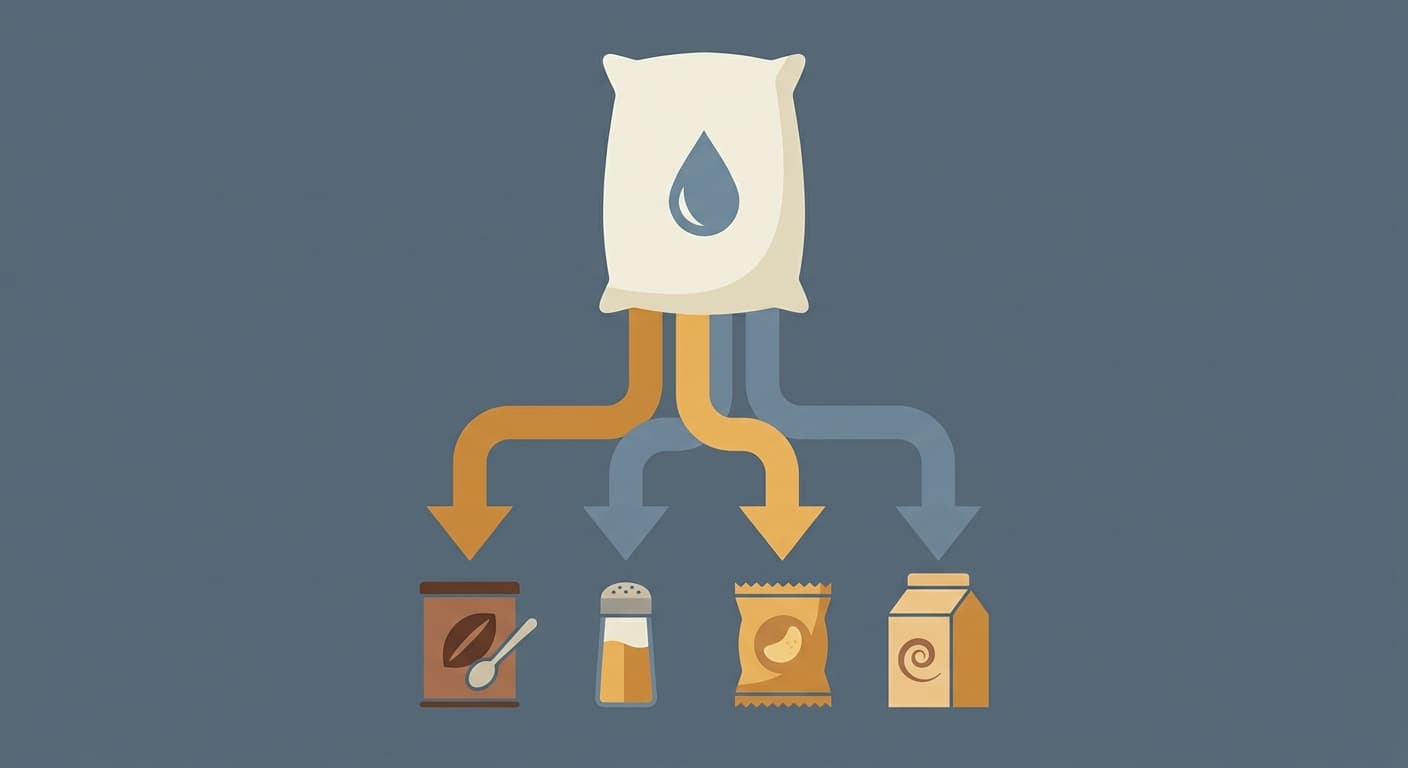
None of them made milk powder. They made pita chips, meatloaf seasoning, hot cocoa mix, and a milk wash packed exclusively for Chick-fil-A.
This is what ingredient-level regulatory risk looks like in practice, and it is worth walking through carefully, because the companies caught in it did nothing wrong except buy a common commodity ingredient from a large, reputable supplier.
What California Dairies recalled
Three entries appeared in FDA's Enforcement Report for the week of May 13, 2026, all Class I, all voluntary and firm-initiated:
| Product | Quantity |
|---|---|
| Low Heat Non-Fat Dried Milk Powder — paper bags, 25 kg | 1,568,793 lbs |
| Low Heat Non-Fat Dried Milk Powder — plastic totes, up to 2,200 lbs | 1,110,564 lbs |
| Buttermilk Powder — paper bags, 25 kg | 19,841 lbs |
Reason for recall, verbatim: "Potential contamination with Salmonella."
The milk powder went out under nine different label designations — Off Grade NFDM Variable, Extra Grade NFDM Standard rBST Free, Grade A NFDM LH Basic, Grade A NFDM LH Green Loop rBST Free, and others. A downstream buyer looking at a certificate of analysis for "Grade A NFDM LH Standard rBST Free" would have no particular reason to connect it to a recall notice naming "Low Heat Non-Fat Dried Milk Powder."
One line in the distribution field deserves attention:
"U.S. Distribution: Unknown and to be determined during RAC assignment. Domestic consignees pick-up product from CDI."
Read that again. At the time of the Class I recall, the manufacturer could not tell FDA where 2.7 million pounds of Salmonella-suspect ingredient had gone inside the United States, because customers collected it themselves. Foreign distribution was better documented: Mexico, the Philippines, and the Dominican Republic.
The cascade, in order
May 13 — Griffith Foods Inc. Three Class I entries the same week as the upstream recall. The recall reason names the mechanism plainly:
"Potential Salmonella contamination. The firm was notified from their supplier that the nonfat dry milk may be contaminated with Salmonella."
The affected products: a Milk Wash packed exclusively for Chick-fil-A (1,450 cases), Costco Service Deli Meatloaf Seasoning (2,374 units of 4x5 lb bags), and a Milk-N-Egg Mix (833 fifty-pound bags). Shipped to fifteen states.
May 27 — Ghirardelli Chocolate Company. Ten Class I entries. Seven Perfectly Premium Frappe Mix flavors (Vanilla, Frozen Hot Cocoa, White Mocha, Mocha, Chocolate, Classic White, plus the 10 lb foodservice format), two Sweet Ground Powder products, and Premium Hot Cocoa Mix — the largest single line at 13,558 cases, or 54,232 retail units. Distribution covered 27 states plus Canada, Guatemala, Japan, the Philippines, the United Kingdom, and South Korea.
May 27 — PS Seasoning & Spices, Inc. Six Class I entries, nationwide. Including Blackstone Parmesan Ranch Seasoning (22,532 lbs, manufactured for North Atlantic Imports), an Ellsworth Sour Cream + Onion Seasoning, a Save A Lot binder, and two smokehouse seasoning units sold to home meat processors.
June 3 — Legacy Bakehouse LLC. Three Class I entries: Giant Eagle Baked Pita Chips with Parmesan, Garlic & Herb, Parmesan & Herb Bagel Crisps, and Butter Parsley Bagel Crisps. Pennsylvania and Wisconsin.
Twenty-two downstream Class I records across four firms, from three upstream ones. Three weeks from first notice to the last of them.
Why this pattern is hard to see coming
Three things make an ingredient cascade different from an ordinary recall, and all three are visible here.
The ingredient is invisible on the product name. Nothing about "Butter Parsley Bagel Crisps" or "Costco Meatloaf Seasoning" says dairy powder. The connection lives in a formulation spec, not a label headline. If you are monitoring recalls by brand or product category, you will not see this coming.
The naming does not match. The upstream notice says "Low Heat Non-Fat Dried Milk Powder." Downstream labels say "nonfat dry milk," "NFDM," "milk solids," or in Griffith's case appear inside a compound ingredient — a milk-and-egg mix that then went into someone else's finished product. Matching on exact strings fails.
The exposure runs several tiers deep. Griffith Foods bought the powder, made a seasoning, and sold it to Chick-fil-A and Costco. Those two brands did not buy from California Dairies and probably could not have named them as a supplier. They still had product pulled.
For the operator, the practical question is not "was I notified?" It is: which of my SKUs contain this ingredient, from this supplier, in this date range? That cross-reference is the entire job, and it is the step that determines whether a supplier's problem becomes your Class I recall.
What this does not tell us
Two honest limits.
First, there is no reported illness cluster tied to these recalls in the enforcement records. Class I means a reasonable probability of serious adverse health consequences — it is a hazard classification, not evidence that anyone got sick. Salmonella in low-moisture dairy powder is a well-established hazard because the organism survives for long periods and the finished products are frequently consumed without a kill step. That is why the classification is what it is.
Second, our count of 22 downstream Class I records reflects the firms we could link to this cascade through FDA's enforcement records and the recall reason text. Other downstream recalls may exist that did not name the supplier notification, and enforcement report entries are periodically updated after initial publication. Treat 22 as a floor, not a final number.
What to do this week
If you buy dairy powder, whey, or milk solids in any form:
- Pull your incoming lot records for nonfat dry milk, buttermilk powder, and any compound ingredient that lists them, going back to the start of 2026.
- Check supplier of record against California Dairies Inc. — and separately, check your second-tier suppliers. Griffith Foods is a customer here and a supplier to others. Your direct vendor may be someone else's downstream.
- Match lot dates against the recall window rather than relying on product names.
The durable fix is knowing which of your finished products contain which ingredients from which suppliers, in a form you can query in an afternoon rather than reconstruct from spreadsheets over a week. Every company in this cascade eventually did that work. The ones who did it fastest recalled least.
Sources
- FDA Enforcement Report, weeks of May 13, May 27, and June 3, 2026 — accessdata.fda.gov/scripts/ires
- Recall classifications, quantities, distribution patterns, and reason-for-recall text as published in the FDA Enforcement Report for each entry cited above.
Policy Canary tracks FDA enforcement at the ingredient level and matches it against your specific product list. We are an intelligence service, not a law firm — this is analysis, not legal advice.
Get this in your inbox every Friday.
Free FDA intelligence digest. No account required.