Two Class I Infant Formula Recalls in Five Weeks — and Neither One Was Cronobacter
FDA classified two powdered infant formula recalls as Class I this summer — one for cereulide toxin, one for Clostridium botulinum covering all 377,610 cans. Neither was Cronobacter. Both organisms are spore-formers, which is a different control problem, and the Class I classification lagged the firms' own announcements by three to five weeks.
Two Class I Infant Formula Recalls in Five Weeks — and Neither One Was Cronobacter
FDA classified two powdered infant formula recalls as Class I this summer. The first involved cereulide toxin. The second involved Clostridium botulinum and covered every lot the company had made — 377,610 cans, nationwide.
Neither involved Cronobacter sakazakii, the organism behind the 2022 formula crisis and the focus of most of the industry's remediation since. That is the part worth thinking about.
The two recalls
a2 Platinum Premium Infant Formula — The a2 Milk Company
The firm announced on May 2, 2026. FDA's Enforcement Report classified it Class I on June 10.
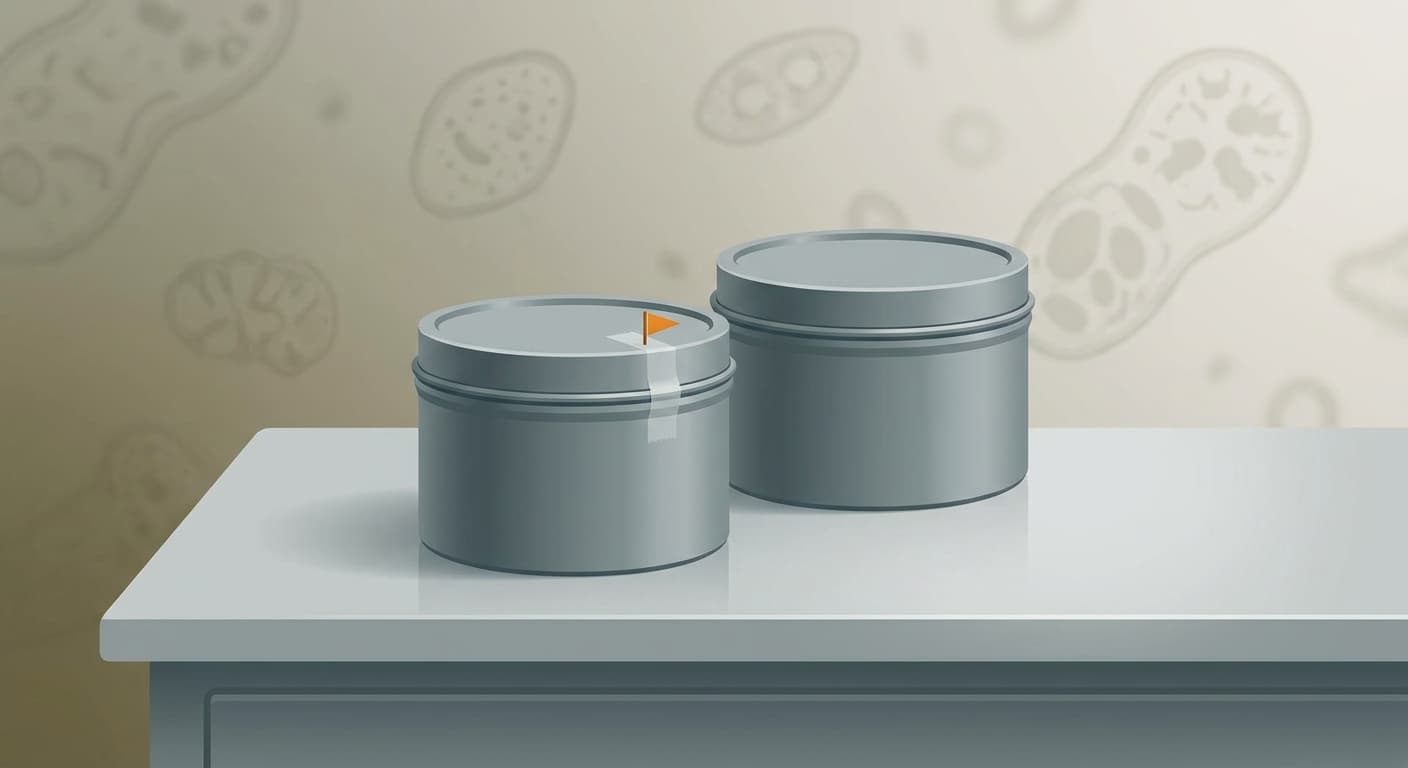
- Product: a2 Platinum Premium infant formula, Milk-based Powder with Iron, 31.7 oz (900 g), metal tin with plastic dust cap
- UPC: 813267020335
- Intended use: infant formula, 0–12 months
- Quantity: 51,202 units, distributed throughout the United States
- Reason for recall: "Possible contamination with Cereulide toxin."
Nara Organics Whole Milk Organic Infant Formula — Nara Organics Inc.
The firm announced on June 13, recalling all lots. FDA classified it Class I on July 8.
- Products: Whole Milk Organic Infant Formula, Milk-based Powder with Iron, 0–12 months, in 24.7 oz (700 g) and 14.1 oz (400 g)
- UPCs: 860013251901 and 860013251918
- Quantity: 377,610 cans, nationwide
- Reason for recall: "Product may be contaminated with Clostridium botulinum."
The common thread
Cereulide is the heat-stable emetic toxin produced by Bacillus cereus. Clostridium botulinum produces the neurotoxin behind botulism. Different organisms, different illnesses — but both are spore-forming bacteria, and that shared property is what makes them a powdered-formula problem specifically.
Powdered infant formula is not a sterile product. It cannot be. The manufacturing process reduces microbial load substantially, but bacterial spores are built to survive exactly the conditions that kill vegetative cells — heat, desiccation, time. A spray-drying step that eliminates most contamination leaves spores intact.
Two consequences follow, and both are why FDA treats these as Class I rather than Class II:
Cereulide is not destroyed by preparation. The toxin is heat-stable. A caregiver mixing formula with hot water inactivates many pathogens. It does not inactivate a toxin that is already present.
Infants are uniquely susceptible to C. botulinum. Under roughly twelve months, an infant's gut flora is not yet established enough to suppress spore germination. Spores that pass harmlessly through an adult can colonize an infant's intestine and produce toxin in place. This is the same reason honey is not given to children under one year.
Our reading of the pattern — and this is interpretation, offered with genuine uncertainty on a two-event sample — is that the industry's post-2022 investment concentrated heavily on Cronobacter: environmental monitoring programs, finished-product testing regimes, and the sampling plans FDA emphasized in its follow-up. Those controls are real and they work for the organism they target. Spore-formers are a different control problem, addressed further upstream in ingredient sourcing and thermal process design rather than in finished-product swabbing. Two Class I recalls in five weeks is not a trend. It is enough to justify asking whether your hazard analysis covers this class of organism.
The classification lag is the operational story
Look at the dates again.
| Firm announcement | FDA Class I classification | Gap | |
|---|---|---|---|
| a2 Platinum | May 2 | June 10 | 39 days |
| Nara Organics | June 13 | July 8 | 25 days |
A retailer, distributor, or co-manufacturer waiting for the Class I designation to act was three to five weeks behind the firm's own public announcement. In the a2 case, that is more than a month of product sitting on shelves and in warehouses while the recall was already public but not yet classified.
This is a general feature of FDA's recall process, not a failure specific to these two events. The firm announces first, often through a press release. FDA's Enforcement Report classification follows after the agency completes its health hazard evaluation. Both appear in different places, on different schedules.
If your monitoring is built around the Enforcement Report, you are structurally late. If it is built around firm press releases, you get speed but no severity signal. You need both, joined.
The regulatory backdrop
FDA was active on infant formula policy during the same window, though on a separate track from these recalls:
- May 21, 2026 — Guidance for Industry issued on Protein Efficiency Ratio (PER) rat bioassay studies used to demonstrate that a new infant formula supports normal physical growth, with a corresponding Federal Register notice on May 22.
- July 17, 2026 — Federal Register notice on information collection activities for infant formula requirements.
Neither is an enforcement action and neither responds to these recalls. We note them because anyone tracking this category should have them on the calendar, and because the PER guidance affects the evidentiary package for new formula submissions.
What to do this week
If you manufacture, co-pack, or private-label powdered infant formula:
- Check whether your hazard analysis names spore-formers explicitly. B. cereus and C. botulinum should appear by name in your HACCP or preventive controls plan, with identified controls. If the plan addresses Cronobacter and Salmonella and stops there, that is the gap these two recalls illuminate.
- Trace your dairy and dry ingredient inputs. Spore risk enters through raw materials. This connects directly to supplier verification — the same failure mode as any other ingredient-borne hazard.
- Review your thermal process against spore survival, not vegetative kill. Different target, different validation.
- Test your recall timeline against a 25-day classification lag. If your trade notification depends on FDA's classification, rebuild it around the firm announcement.
Sources
- FDA Enforcement Report, weeks of June 10 and July 8, 2026 — accessdata.fda.gov/scripts/ires
- Firm recall announcements: The a2 Milk Company (May 2, 2026); Nara Organics Inc. (June 13, 2026) — FDA Recalls, Market Withdrawals & Safety Alerts
- Guidance for Industry: Protein Efficiency Ratio (PER) Rat Bioassay Studies (May 21, 2026); Federal Register notice (May 22, 2026)
- Federal Register, Agency Information Collection Activities: Infant Formula Requirements (July 17, 2026)
Policy Canary tracks FDA enforcement and matches it against your specific products. We are an intelligence service, not a law firm — this is analysis, not legal advice.
Get this in your inbox every Friday.
Free FDA intelligence digest. No account required.