FDA Food Additive Regulations 2026: Red No. 3 Ban, Petroleum Dye Phase-Out, BHA Safety Review, and What Food Brands Must Do Now
FDA food additive regulations are seeing their biggest overhaul in decades. Here's the current state of the Red No. 3 ban, petroleum dye phase-out, BHA safety review, and GRAS reform — with deadlines and action items for food brands.
FDA food additive regulations are undergoing their most significant overhaul in decades. In the span of 14 months — January 2025 through March 2026 — the agency revoked one certified color additive, issued a formal safety reassessment on a preservative that has been on the market since 1958, signaled it intends to phase out all petroleum-derived synthetic dyes by the end of 2026, and advanced proposed rulemaking to close the GRAS self-affirmation loophole that has allowed more than 100 food chemicals to enter the U.S. market without formal FDA review. For food brands, this is not a compliance horizon — it is a compliance collision.
This post covers the current state of every major ingredient ban and reform signal, what the timeline looks like through 2028, and the specific actions brand teams and their regulatory leads need to take now.
Red Dye No. 3: The Ban Is Final — and the Clock Is Running
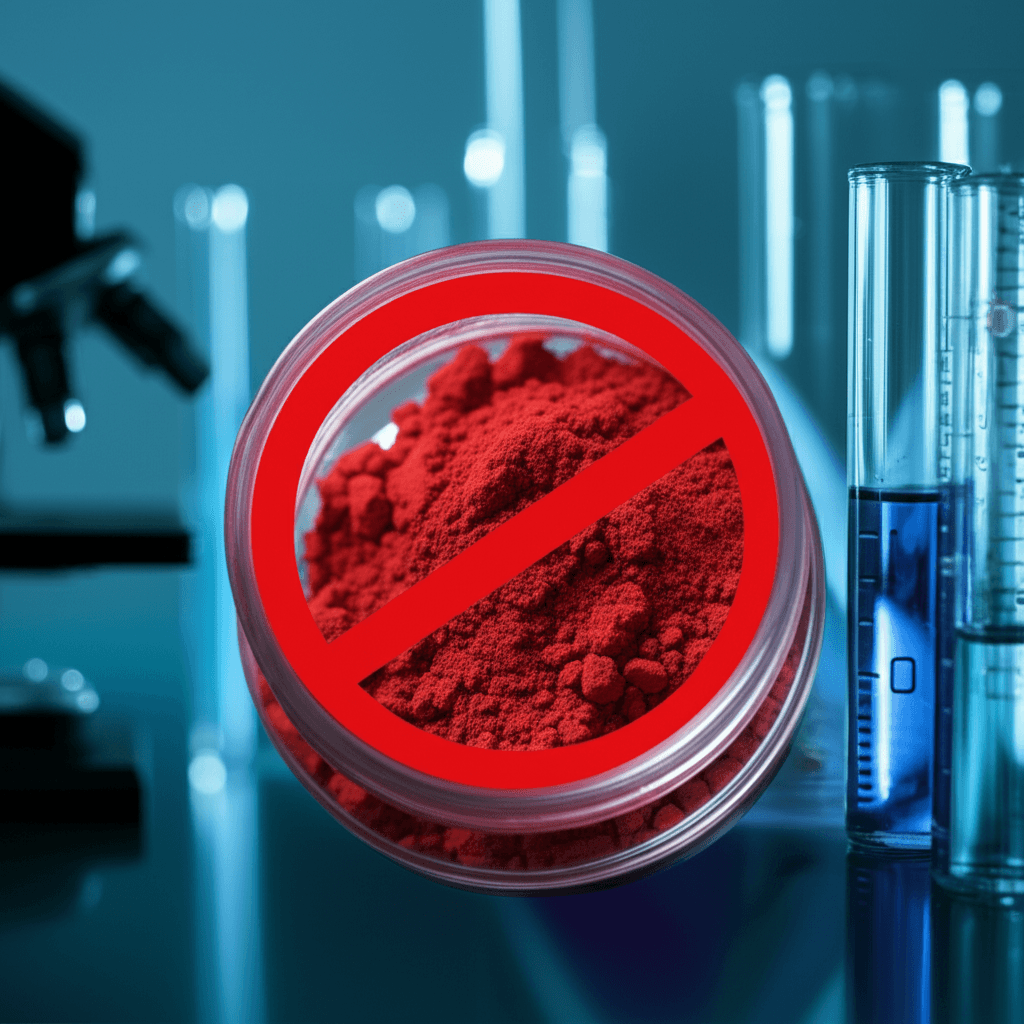
In January 2025, FDA revoked authorization for Red Dye No. 3 (erythrosine, FD&C Red No. 3) in food and ingested drugs. The revocation was mandated by the Delaney Clause — a 1960 provision of the Federal Food, Drug, and Cosmetic Act that prohibits approval of any food additive shown to cause cancer in humans or animals. Animal studies had demonstrated a carcinogenic risk decades before the final rule, but the agency delayed action for more than 30 years after initial petitions were filed.
Under the final rule:
- Food manufacturers had until January 15, 2027 to reformulate
- Ingested drugs (e.g., maraschino cherries, certain medications) had until January 18, 2028
- Any product using Red No. 3 and placed on the market after those dates is adulterated under federal law
Red No. 3 was used primarily for its vivid cherry-red color in products including maraschino cherries, canned fruit cocktail, cocktail cherries, and certain candies. The color is distinct from Red No. 40, which has not been revoked but is under broader political pressure (see below).
Brands still carrying Red No. 3 in any formulation are now in the final reformulation window. With less than 10 months to the food deadline, if you haven't filed a reformulation plan, you are behind schedule.
The Petroleum Dye Phase-Out: Political Signal, Not (Yet) Final Rule
In April 2025, the Trump administration and the Make America Healthy Again Commission announced a goal to phase out all petroleum-derived certified synthetic food dyes from the U.S. food supply by the end of 2026. The affected dyes are FD&C certified colors including:
- Red 40 (Allura Red AC)
- Yellow 5 (Tartrazine)
- Yellow 6 (Sunset Yellow)
- Blue 1 (Brilliant Blue)
- Blue 2 (Indigo Carmine)
- Green 3
- Red 3 (already revoked — see above)
As of March 2026, no final rule revoking these dyes has been issued. The December 2026 goal is a policy aspiration, not a regulatory deadline with legal teeth — yet. What has happened is market-driven preemption: major retailers are moving before regulators do.
Target announced in early March 2026 that by end of May 2026, only cereals made without certified synthetic colors will be stocked. General Mills (Lucky Charms) and WK Kellogg (Froot Loops) have both pledged synthetic dye removal by end of 2027. Wells Enterprises began transitioning Bomb Pop to natural colors (spirulina, turmeric, vegetable juice) starting April 2026.
The practical implication: even if FDA does not issue a final rule by December 2026, major retail channel requirements are creating a de facto ban for high-velocity food categories. Cereal, candy, frozen treats, and beverages are first. Other categories will follow.
71% of U.S. shoppers say they are concerned or somewhat concerned about themselves or their children consuming artificial colors, according to a 2025 Oterra/Veylink survey of U.S. consumers.
Policy Canary database: FDA recalls surged 62% from Q1 to Q2 2024, with warning letters tripling in the same period — the heightened enforcement environment food brands now operate in.
BHA: A 30-Year-Old Petition, a New Reckoning
Butylated hydroxyanisole (BHA) — a synthetic antioxidant preservative used to extend shelf life of fats and oils in cereals, frozen meals, cookies, candy, ice cream, and meat products — was listed as GRAS in 1958 and approved as a food additive in 1961. In February 2026, FDA issued a Request for Information (RFI) under Docket No. FDA-2026-N-0302, formally reassessing BHA's safety.
The RFI was triggered by two parallel pressures:
- Science: The National Institutes of Health's National Toxicology Program lists BHA as "reasonably anticipated to be a human carcinogen." Evidence of carcinogenicity has accumulated over decades.
- State action: West Virginia passed a law banning sale of products containing BHA (among other ingredients) effective January 1, 2028 — though a federal judge has since issued a preliminary injunction blocking enforcement of the 2028 provisions while litigation proceeds. The school meal provisions (effective August 2025) remain in force. Other states are watching.
HHS Secretary Robert F. Kennedy Jr. framed the reassessment bluntly: "This reassessment marks the end of the 'trust-us' era in food safety. If BHA cannot meet today's gold-standard science for its current uses, we will remove it from the food supply."
The public comment deadline is April 13, 2026 (Docket No. FDA-2026-N-0302). Manufacturers that use BHA — and food ingredient suppliers that sell BHA-stabilized oils — should comment now if they want their data in the record.
A ban is not certain. An RFI is early-stage; FDA has not yet proposed a rule. But the regulatory direction is clear, and the West Virginia deadline provides a concrete reformulation forcing function for brands with national distribution.
EWG noted that a petition to ban BHA has been pending since 1990 — 36 years of accumulated evidence before FDA acted. That pace is ending.
The GRAS Problem: 100+ Chemicals, No Review
The most structurally significant reform signal of early 2026 is the one receiving the least attention from food brand legal teams: GRAS reform.
Under the FD&C Act, substances that are "generally recognized as safe" by qualified experts are exempt from the standard food additive petition process. In practice, FDA has allowed manufacturers to self-affirm GRAS status without notifying the agency — meaning a food company's own scientists can decide an ingredient is safe, begin using it commercially, and never tell FDA.
A March 3, 2026 investigation published jointly by the Environmental Working Group and covered extensively by CNN found:
- More than 100 chemicals entered the U.S. food supply since 2000 without formal FDA review under the GRAS self-affirmation process
- Aloe vera extracts that bypassed FDA review appear in more than 450 products in USDA's FoodData Central
- The tara flour case — where an outbreak of liver injury was the first signal FDA examined whether the ingredient was safe — illustrates the worst-case scenario of the current system
FDA has acknowledged the problem. In a statement responding to the EWG investigation, FDA's acting director stated: "Over the past year, we have advanced reforms to strengthen oversight of the GRAS pathway, including steps toward requiring greater notification, enhancing interagency review, and increasing transparency around food ingredient safety through proposed rulemaking."
This is proposed rulemaking — not final action. But the direction is clear: the GRAS self-affirmation pathway is being closed, or at minimum heavily restricted. Brands that have relied on self-affirmed GRAS determinations for any ingredient should initiate internal audits now.
Our database shows Listeria monocytogenes (96 actions), Salmonella (57 actions), and undeclared milk and wheat allergens among the leading recall drivers — the enforcement context food brands navigate alongside additive regulatory changes.
FSMA in the Background: Produce Safety Gets Updated Standards
While the additive bans have dominated headlines, FDA is quietly reinforcing the Food Safety Modernization Act infrastructure. On February 24, 2026, FDA announced new Produce Regulatory Program Standards (PRPS), developed in collaboration with NASDA and AFDO, establishing updated inspector training requirements, sampling protocols, and incident response mechanisms for state produce safety programs.
FSMA's produce safety requirements (21 CFR Part 112) have been in effect for large farms since 2018. The new PRPS are an administrative layer — they don't change the rules brands must follow, but they will mean more consistent and competent inspection at the state level. For food brands sourcing produce from farms subject to FSMA's Produce Safety Rule, this means your upstream supply chain is about to receive more uniform scrutiny.
The Reformulation Timeline: What Food Brands Must Track
| Deadline | What Changes | Affected Products |
|---|---|---|
| January 15, 2027 | Red Dye No. 3 banned in food | Maraschino cherries, fruit cocktail, candy, baked goods |
| May 2026 | Target cereal aisle: no synthetic dyes | Cereals sold at Target |
| End of 2026 (goal) | Trump/MAHA synthetic dye phase-out target | All FD&C-certified color users |
| End of 2027 | General Mills, WK Kellogg pledge | Lucky Charms, Froot Loops |
| January 18, 2028 | Red Dye No. 3 banned in ingested drugs | Pharmaceutical manufacturers |
| January 1, 2028 | West Virginia BHA ban (currently enjoined pending litigation) | Products sold in WV |
| TBD (proposed rule) | GRAS notification requirement | Any brand using self-affirmed GRAS ingredients |
What Food Brands Should Do Right Now
If you use Red Dye No. 3 in any formulation: Check every SKU. The January 2027 deadline is not abstract — it is less than 10 months away. Reformulation lead times for color transitions, especially in confectionery and baked goods, run 6-18 months. If you haven't started, you are at risk of shelf disruption.
If you use any FD&C-certified petroleum-derived dyes: Red 40, Yellow 5, Yellow 6, Blue 1, and others are politically targeted even without a final rule. Retailer channel requirements (Target, likely others) are creating de facto deadlines. Model your reformulation options now. The natural color market — spirulina, turmeric, beta-carotene, anthocyanins, lycopene — has scaled significantly since 2025 demand surged 71% in consumer concern metrics.
Comment on Docket No. FDA-2026-N-0302 before April 13, 2026 if you have safety or use data. Plan for a post-BHA formulation in parallel. The West Virginia ban is currently enjoined, but the regulatory direction is one-way — and additional states are considering similar legislation.
If you have any self-affirmed GRAS ingredients in your formulation: Audit now. The GRAS proposed rule will almost certainly require notification where none exists today. That means your self-affirmed ingredients may need to go through FDA review for the first time. Some will pass. Some won't. Knowing which is which before the rule is finalized gives you options; finding out after gives you a recall.
The Bottom Line
FDA food additive regulations are not drifting in a new direction — they are accelerating toward one. The Red No. 3 revocation proved FDA will use the Delaney Clause when forced. The BHA RFI shows the agency is not waiting for another petition to sit for 30 years. The GRAS reform signals show the self-affirmation pathway is ending. And the synthetic dye phase-out, even without a final rule, has already reshaped what major retailers will stock.
Food Safety Modernization Act compliance has always been about building systems that catch problems before regulators do. The additive reform wave of 2025-2026 is the same principle applied to ingredients: the brands that audit their formulations now, before rules are final, will reformulate on their schedule. Everyone else will do it on FDA's.
Policy Canary monitors FDA changes for your specific products — by name, by ingredient. When Red No. 3 was revoked, we flagged every Policy Canary user whose ingredient list included erythrosine within 24 hours. When the BHA RFI was published, we noted the April 13 comment deadline alongside the docket number. That's what ingredient-level monitoring looks like. Join the pilot program
Get this in your inbox every Friday.
Free FDA intelligence digest. No account required.