Weekly FDA Roundup: Higher-Dose Wegovy Fast-Tracked, Device Recalls Report Injuries and a Death, Week of March 14-20, 2026
Higher-dose Wegovy approved in 54 days via the CNPV program. Two device recalls tied to 22 injuries and one death. Made Fresh Salads pulls 14 cream cheese products for Listeria. Plus 11 warning letters.
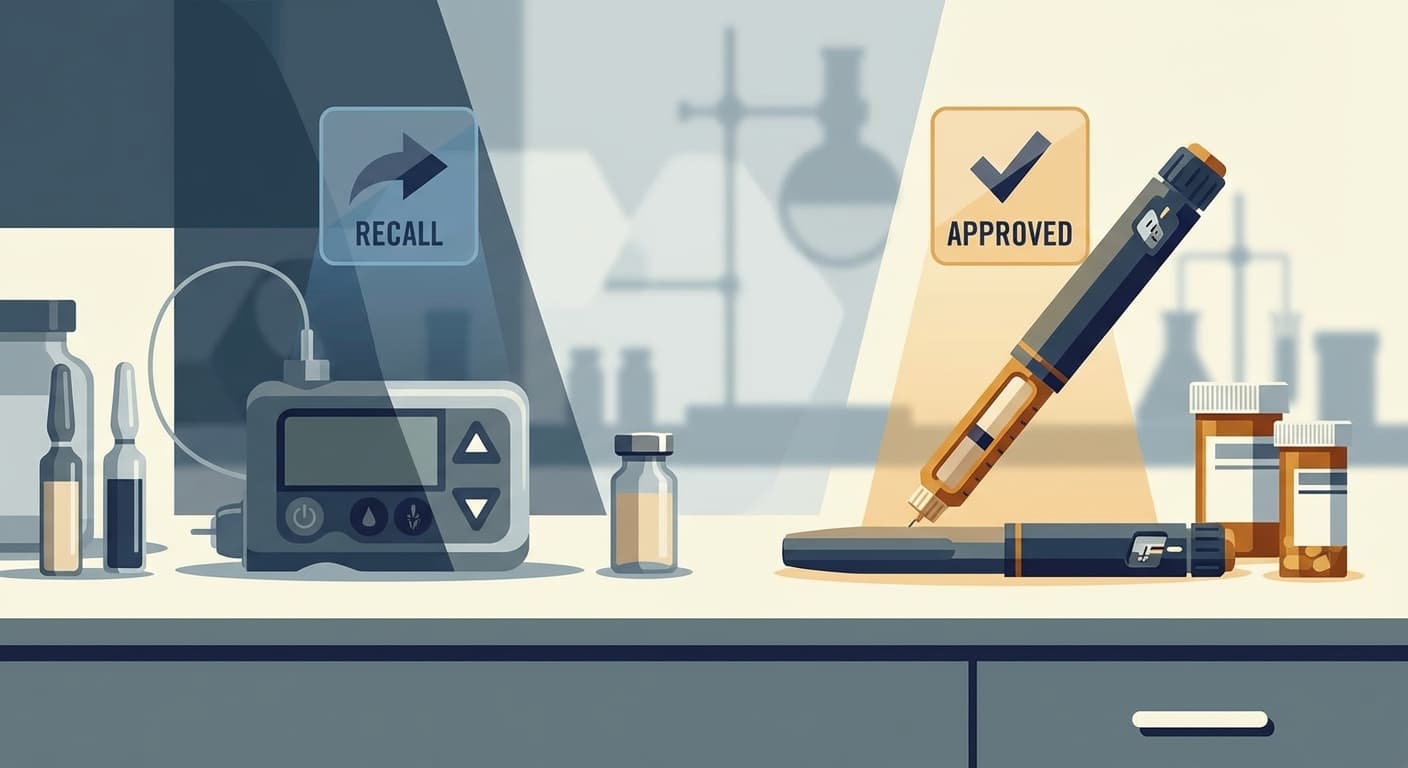
61 regulatory actions this week. The FDA approved a higher-dose Wegovy in 54 days flat, issued two urgent device recalls tied to one death and 22 injuries, and swept 14 cream cheese products off shelves for Listeria. Eleven warning letters hit compounding pharmacies, device makers, food importers, and online drug sellers.
By the numbers
- 30 recalls (15 Class I, 10 Class II, 1 Class III, 4 unclassified)
- 11 warning letters (3 CGMP/drugs, 2 devices, 2 food importers, 2 tobacco, 1 online drugs, 1 GLP fraud)
- 5 safety alerts (insulin pumps, surgical staplers, heating pads, needles, dialysis tubing)
- 3 press releases (Wegovy HD approval, CNPV hearing, NAMs guidance)
- 1 draft guidance (New Approach Methodologies for drug development)
Wegovy HD: 54 days from submission to approval
FDA approved Wegovy HD (semaglutide 7.2 mg injection) for chronic weight management in adults with obesity or overweight. The approval came through the Commissioner's National Priority Voucher (CNPV) pilot program, which compressed the review to 54 days. This is the fourth product approved under the CNPV since its launch.
The higher dose extends the existing Wegovy line (currently available up to 2.4 mg). Labeling includes a boxed warning for thyroid C-cell tumors, consistent with class labeling for all GLP-1 receptor agonists. Common side effects remain gastrointestinal: nausea, diarrhea, vomiting.
One detail buried in the press release: FDA noted "emerging reports of altered skin sensations" that the agency is currently investigating. No formal safety signal has been declared, but the language is specific enough to suggest real post-market monitoring is underway.
The CNPV program itself is expanding. FDA scheduled a public hearing for June 12, 2026, with a comment period closing June 27, to discuss the program's structure and future priorities.
Device recalls: one death, 22 injuries across two products
Two device safety alerts landed in the same week, both with documented patient harm.
Omnipod 5 insulin pump pods (Insulet): Certain lots recalled after internal tubing tears caused insulin leakage inside the device. Under-delivery of insulin can cause severe hyperglycemia and diabetic ketoacidosis. Eighteen serious injuries reported as of March 2026.
Source: FDA Safety Alert
SureForm 30 surgical stapler reloads (Intuitive Surgical): Two part numbers of 8mm gray reloads recalled for producing incomplete staple lines during surgery. Tissue gets cut without proper vessel sealing, causing severe bleeding. Four serious injuries and one death reported.
Source: FDA Safety Alert
Made Fresh Salads: 14 cream cheese products recalled for Listeria
Made Fresh Salads pulled 14 varieties of cream cheese (all in 5 lb foodservice tubs) after finding potential Listeria monocytogenes contamination. The affected products: Walnut Raisin, Garlic & Herb, Sundried Tomato, Tofu Whipped, Vegetable, Whipped, Caramel Apple, Jalapeno, Blueberry, Jalapeno Cheddar, Scallion, Lox, Strawberry, and Apple Cinnamon. All Class I.
For food manufacturers sourcing cream cheese for foodservice, this is a supplier verification check. One contamination event, 14 SKUs affected simultaneously.
Hidden prescription drugs in supplements (again)
Two separate recalls this week for products marketed as dietary supplements that actually contained sildenafil and tadalafil, both prescription erectile dysfunction medications.
Gear Isle recalled "Gold Lion Aphrodisiac Chocolate Sachet" and "ilum Sex Chocolate" after FDA lab analysis. Pure Vitamins and Natural Supplements recalled "Boner Bear Honey," "Red Bull Extreme," and "Blue Bull Extreme" honey products for the same reason. Both companies sold online nationwide.
The risk is the same in both cases: sildenafil and tadalafil can interact with nitrates (like nitroglycerin for heart conditions) and cause life-threatening drops in blood pressure. These recalls are routine at this point, but the frequency tells you something about the size of this market.
Sources: Gear Isle Recall | Pure Vitamins Recall
Warning letters: compounding, GLP fraud, and three food importers
Eleven warning letters this week. Three patterns stand out.
Compounding pharmacy CGMP violations: Apothecary Pharma, a 503B outsourcing facility, was cited for insanitary conditions and sterility failures in the production of compounded Tirzepatide and Semaglutide injections. With GLP-1 drug shortages driving patients toward compounding pharmacies, FDA is watching this category closely. The letter cited improper aseptic technique, unvalidated airflow, and missing ingredient labeling.
Source: Apothecary Pharma Warning Letter
GLP fraud (Vedic Lifesciences): FDA found that Vedic Lifesciences altered final study reports for an investigational drug to falsely list Vedic personnel and facilities as the study directors and testing sites. The actual work was done by subcontracted labs. This is data integrity fraud in nonclinical studies, and it calls into question every study this firm has submitted.
Source: Vedic Lifesciences Warning Letter
Food importers (3 letters): Trangs Group USA (frozen bao buns, FSVP failure), A TO Z Distributor (cucumbers, sesame seeds, FSVP plus missing facility registration), and Feng Foods Trading (fish and shellfish, seafood HACCP). All three were cited for failing to verify that their foreign suppliers meet U.S. food safety standards.
FDA draft guidance: alternatives to animal testing
FDA released a draft guidance on New Approach Methodologies (NAMs) for drug development. The document provides a validation framework for using organ-on-a-chip models, in-silico simulations, and other non-animal methods in regulatory submissions. FDA also updated pyrogen/endotoxin testing guidance to support recombinant reagents, consistent with current USP standards.
This is the formal regulatory framework for what the FDA Modernization Act 2.0 (signed December 2022) made possible. Drug sponsors who want to reduce or replace animal studies now have clearer submission guidance.
Source: FDA Draft Guidance
The bigger picture
The CNPV program is the story to watch this year. Four approvals and counting, with a public hearing in June to shape its future scope. The 54-day Wegovy HD review shows that when the government decides something is a national priority, the regulatory machine can move fast. The question is what else gets that designation.
On the device side, two recalls involving patient deaths and injuries in the same week is a reminder that post-market surveillance catches what pre-market review can't. Both the Omnipod 5 and SureForm stapler issues were manufacturing defects, not design flaws. Quality systems and incoming inspection are the defense.
What to watch
- CNPV public hearing: June 12, 2026. Comments close June 27. If you're developing products that could qualify as national health priorities, review the docket.
- Gluten cross-contact labeling: Comment period extended to April 22, 2026. Food manufacturers should weigh in.
- ICCR-20 cosmetics meeting: FDA is accepting comments for the international cosmetics regulation meeting. Relevant for MoCRA-affected companies tracking global alignment.
- Sunlamp rule withdrawn: FDA pulled its 2015 proposed rule to restrict sunlamp sales to minors. If you're in the tanning device space, this resets the regulatory clock.
Policy Canary monitors FDA enforcement actions, recalls, warning letters, and regulatory changes so your compliance team doesn't have to. Start your free trial at policycanary.io
Get this in your inbox every Friday.
Free FDA intelligence digest. No account required.